Body
How to choose a centrifuge tube: key indicators of capacity, material, temperature resistance, centrifugal force resistance and sealing
Search intent and question boundaries
How to choose centrifuge tubes is a frequently searched topic because users often have encountered specific problems: they don’t know which type of centrifuge to buy, they are not sure whether the parameters are sufficient, they are worried that the rotor and centrifuge tubes are not compatible, or the existing equipment has bottlenecks in batch samples, temperature control and maintenance. This article focuses on "centrifuge tube selection" and breaks down the centrifuge tubes, centrifuge tube capacity, centrifugal force resistance, centrifuge tube material, and sealed centrifuge tubes that search users really care about into executable judgment steps.
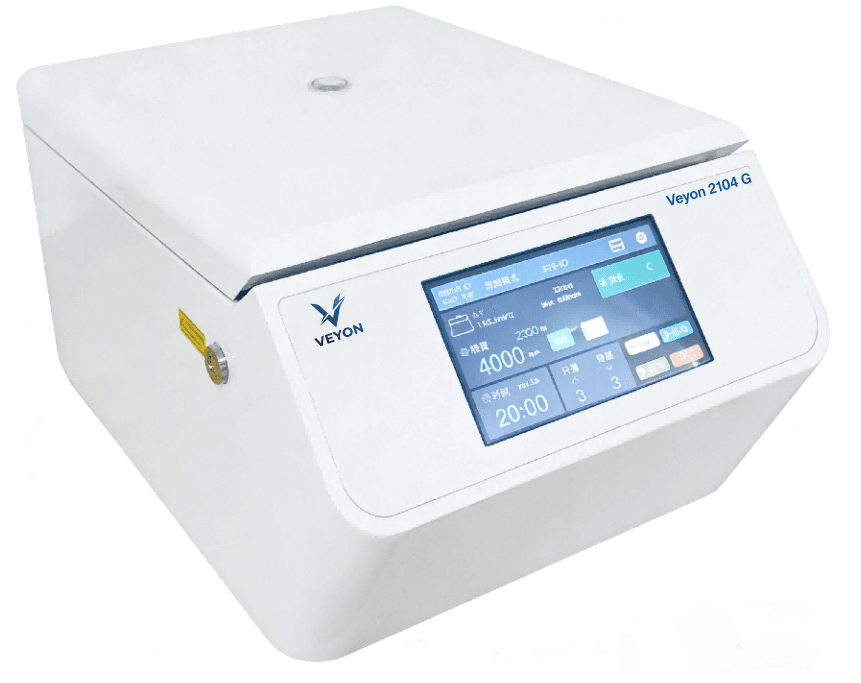
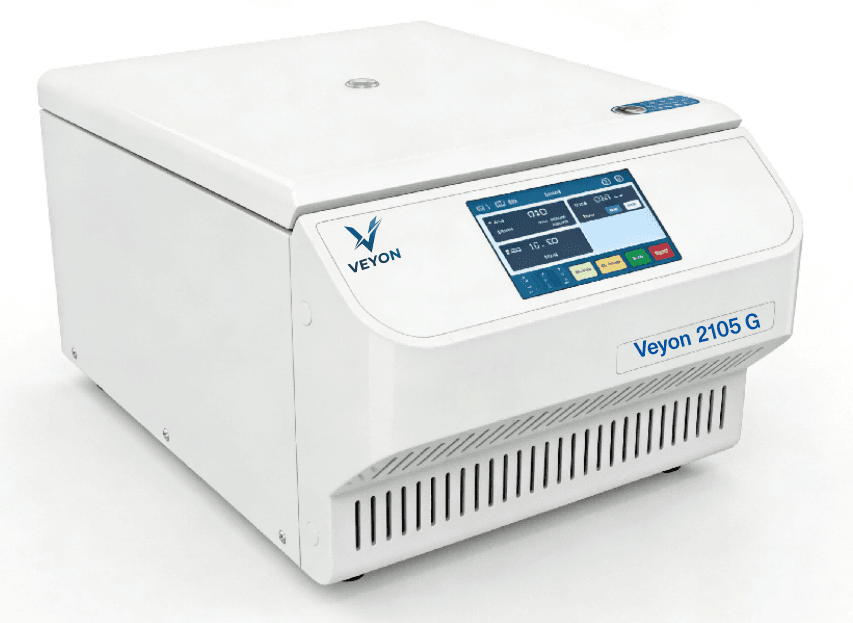
At the demand level, the judgment of a centrifuge tube cannot just stop at “whether it can spin” or “what is the maximum speed”. Regarding the selection of centrifuge tubes, it is more critical to put the sample type, target isolate, centrifugal force, temperature window, single batch processing capacity, consumable specifications and personnel operating habits into the same table for comparison. When making plans for sample pre-processing, consumable procurement and experimental SOPs, the developers should first confirm the purpose of the experiment, then confirm the equipment capabilities, and finally confirm the long-term maintenance costs. The advantage of this is that the parameter comparison in the procurement stage will become a verifiable process design instead of a simple list of models. For the Veyon product matrix, models such as Veyon 2104 g, Veyon 2105 g, Veyon 2415, Veyon 2417 rg, Veyon 2922 g cover different speeds, capacities and temperature control requirements, and are suitable for establishing configuration ideas from conventional processing to high-throughput processing.
Start with the sample and experimental goals first, not the model
At the sample level, the judgment of a centrifuge tube cannot just stop at "whether it can spin" or "what is the maximum speed". Regarding the selection of centrifuge tubes, it is more critical to put the sample type, target isolate, centrifugal force, temperature window, single batch processing capacity, consumable specifications and personnel operating habits into the same table for comparison. When making plans for sample pre-processing, consumable procurement and experimental SOPs, the developers should first confirm the purpose of the experiment, then confirm the equipment capabilities, and finally confirm the long-term maintenance costs. The advantage of this is that the parameter comparison in the procurement stage will become a verifiable process design instead of a simple list of models. Many selection errors are not due to insufficient equipment performance, but rather to failure to clearly describe the sample conditions in the early stage. For example, for the same "centrifuged blood sample", the goals of serum, plasma, PRP, whole blood cell precipitation and sample library pre-processing are not exactly the same; for the same "high-speed centrifugation", nucleic acid extraction, protein precipitation, cell debris removal and nanoparticle processing also have different requirements for RCF, temperature and rotor capacity.
It is recommended to sort out the following information before consulting or purchasing:
- Write down the sample clearly first: blood, urine, cells, nucleic acid, protein, environmental water sample, material suspension or industrial quality control sample.
- Write down the goals clearly: precipitation, clarification, stratification, concentration, washing, temperature control protection or batch preparation.
- Convert RPM to RCF and record the rotor radius to avoid irreproducibility between different equipment.
- Confirm that the rotor, adapter, tube and sealing method match the target centrifugal force.
- Confirm equipment installation space, noise requirements, power supply conditions and daily cleaning paths.
The clearer this information is, the easier it will be for centrifuge tube planning to be tailored to specific equipment, rotors, and operating procedures.
Relationship between RPM, RCF and rotor radius
The most misunderstood of centrifuge parameters is speed. RPM stands for revolutions per minute and RCF stands for the relative centrifugal force actually experienced by the sample. Even if the RPM of two devices is the same, as long as the rotor radius is different, the RCF experienced by the sample will be different. Therefore, when establishing an SOP around centrifuge tube selection, it is not recommended to just write "how many revolutions", but try to write "how many × g, how many minutes, how many degrees Celsius, and which rotor to use."
At the parameter level, the judgment of a centrifuge tube cannot just stop at “whether it can spin” or “what is the maximum speed”. Regarding the selection of centrifuge tubes, it is more critical to put the sample type, target isolate, centrifugal force, temperature window, single batch processing capacity, consumable specifications and personnel operating habits into the same table for comparison. When making plans for sample pre-processing, consumable procurement and experimental SOPs, the developers should first confirm the purpose of the experiment, then confirm the equipment capabilities, and finally confirm the long-term maintenance costs. The advantage of this is that the parameter comparison in the procurement stage will become a verifiable process design instead of a simple list of models. If you are migrating from old equipment to new equipment, you should first use RCF for method transfer, and then convert RPM based on the radius of the new rotor. This reduces the risk of insufficient sedimentation, over-compaction of the sample, protein denaturation, or reduced cell viability.
Trade-offs between capacity, flux and space
The larger the capacity, the better, nor the smaller, the more flexible. Small-capacity equipment is suitable for high-frequency, small-volume, and rapid processing; large-capacity equipment is suitable for batch samples, project-based testing, and centralized pre-processing. What really needs to be compared is "how many batches are processed every day, how many tubes per batch, how many milliliters per tube, and whether you need to wait for the same equipment."
At the flux level, the judgment of a centrifuge tube cannot just stop at “whether it can spin” or “what is the maximum speed”. Regarding the selection of centrifuge tubes, it is more critical to put the sample type, target isolate, centrifugal force, temperature window, single batch processing capacity, consumable specifications and personnel operating habits into the same table for comparison. When making plans for sample pre-processing, consumable procurement and experimental SOPs, the developers should first confirm the purpose of the experiment, then confirm the equipment capabilities, and finally confirm the long-term maintenance costs. The advantage of this is that the parameter comparison in the procurement stage will become a verifiable process design instead of a simple list of models. If lab space is limited, desktop models can be used for routine tasks; if sample volumes continue to increase, or multiple personnel share the same equipment, high-volume or floor-standing options should be considered. For batch samples that need to be frozen, the pre-cooling time and the temperature recovery ability after continuous operation must also be taken into consideration.
Temperature control and sample protection
Not all experiments require a refrigerated centrifuge, but once temperature-sensitive samples require temperature control, you can't just look at the "lowest temperature." More practical indicators include: no-load and load cooling speed, cavity temperature stability during continuous operation, recovery speed after opening the cover and changing samples, condensate water treatment, rotor pre-cooling habits and laboratory ambient temperature.
In terms of temperature control, the judgment of a centrifuge tube cannot only be based on "whether it can spin" or "what is the maximum speed". Regarding the selection of centrifuge tubes, it is more critical to put the sample type, target isolate, centrifugal force, temperature window, single batch processing capacity, consumable specifications and personnel operating habits into the same table for comparison. When making plans for sample pre-processing, consumable procurement and experimental SOPs, the developers should first confirm the purpose of the experiment, then confirm the equipment capabilities, and finally confirm the long-term maintenance costs. The advantage of this is that the parameter comparison in the procurement stage will become a verifiable process design instead of a simple list of models. For centrifuge tube related scenarios, if the target sample is nucleic acids, proteins, cells, enzymes, exosomes or some clinical samples, low temperature protection should be written into the method file.
Rotor, adapter and tube compatibility
The rotor determines the angle, path, capacity and force mode of the sample during centrifugation. Fixed-angle rotors are often used for high-speed micro-samples and tasks requiring high precipitation efficiency; horizontal rotors are more suitable for blood, clinical tubes, enzyme plates, or samples that require clear stratification. The adapter seems to be a small accessory, but it directly affects the support, force uniformity and safety margin of the pipe body.
At the consumable level, the judgment of a centrifuge tube cannot just stop at “whether it can spin” or “what is the maximum speed”. Regarding the selection of centrifuge tubes, it is more critical to put the sample type, target isolate, centrifugal force, temperature window, single batch processing capacity, consumable specifications and personnel operating habits into the same table for comparison. When making plans for sample pre-processing, consumable procurement and experimental SOPs, the developers should first confirm the purpose of the experiment, then confirm the equipment capabilities, and finally confirm the long-term maintenance costs. The advantage of this is that the parameter comparison in the procurement stage will become a verifiable process design instead of a simple list of models. Before purchasing, the maximum RCF of the rotor, allowed tube type, single hole capacity, sealing scheme and cleaning method should be confirmed. "Can be put in" should not be regarded as "can operate safely".
Safe operations and exception handling
Centrifuges are high-speed rotating equipment, and safety management must be at the forefront. Common risks include sample imbalance, tube rupture, rotor corrosion, seal failure, aerosol escape, abnormal door locks and overspeed operation. For new employees or laboratories used in multiple shifts, it is recommended to write down the standard procedures for trimming, loading, closing the lid, starting, waiting to stop, opening the lid for inspection, cleaning and disinfection, and abnormal reporting.
Common misunderstandings include:
- Only look at the maximum speed, ignore the maximum relative centrifugal force and rotor radius.
- Only look at the host price, ignoring the cost of rotors, adapters, consumables and maintenance.
- Only look at the single capacity, ignoring the number of batches per day, queuing time and personnel operation intensity.
- Ignoring the temperature control recovery speed, causing temperature-sensitive samples to deviate from method requirements during waiting or continuous runs.
- Trim, cover opening, rotor life and abnormal alarms are not included in the training.
From a safety perspective, the judgment of a centrifuge tube cannot only be based on “whether it can spin” or “what is the maximum speed”. Regarding the selection of centrifuge tubes, it is more critical to put the sample type, target isolate, centrifugal force, temperature window, single batch processing capacity, consumable specifications and personnel operating habits into the same table for comparison. When making plans for sample pre-processing, consumable procurement and experimental SOPs, the developers should first confirm the purpose of the experiment, then confirm the equipment capabilities, and finally confirm the long-term maintenance costs. The advantage of this is that the parameter comparison in the procurement stage will become a verifiable process design instead of a simple list of models. When the equipment experiences abnormal vibrations, abnormal sounds, burnt smells, door lock errors, or temperature abnormalities, it should stop running and record the program, rotor, sample, and alarm information to avoid continued use with faults.
Configuration ideas with existing Veyon models
Regarding centrifuge tube selection, Veyon models can be understood as several levels: low-speed desktop models are responsible for routine sample processing and preclinical processing; high-speed and micro-volume models are responsible for nucleic acid, protein and micro-volume samples; freezer models are responsible for temperature-sensitive sample protection; large-capacity and floor-standing models are responsible for batch samples and centralized processing. Relevant models in this article include: Veyon 2104 g, Veyon 2105 g, Veyon 2415, Veyon 2417 rg, Veyon 2922 g.
At the configuration level, the judgment of a centrifuge tube cannot just stop at “whether it can spin” or “what is the maximum speed”. Regarding the selection of centrifuge tubes, it is more critical to put the sample type, target isolate, centrifugal force, temperature window, single batch processing capacity, consumable specifications and personnel operating habits into the same table for comparison. When making plans for sample pre-processing, consumable procurement and experimental SOPs, the developers should first confirm the purpose of the experiment, then confirm the equipment capabilities, and finally confirm the long-term maintenance costs. The advantage of this is that the parameter comparison in the procurement stage will become a verifiable process design instead of a simple list of models. In actual selection, it is not recommended to choose only a single “universal device”. A safer approach is to use a general-purpose device to cover daily tasks, and then configure dedicated equipment for high-frequency or high-risk tasks.
Recommended selection process
In the first step, the sample and target isolate are identified. In the second step, the experimental method is translated into RCF, time, temperature and rotor conditions. The third step is to confirm the number of batches per day and the maximum concurrency. Step 4: Check the rotor, adapter, centrifuge tube and sealing requirements. The fifth step is to evaluate maintenance, calibration, training and after-sales. The sixth step is to use real samples or representative samples for trial run verification.
At the process level, the judgment of a centrifuge tube cannot just stop at “whether it can spin” or “what is the maximum speed”. Regarding the selection of centrifuge tubes, it is more critical to put the sample type, target isolate, centrifugal force, temperature window, single batch processing capacity, consumable specifications and personnel operating habits into the same table for comparison. When making plans for sample pre-processing, consumable procurement and experimental SOPs, the developers should first confirm the purpose of the experiment, then confirm the equipment capabilities, and finally confirm the long-term maintenance costs. The advantage of this is that the parameter comparison in the procurement stage will become a verifiable process design instead of a simple list of models. If the procurement is used for the construction of a new platform, it is recommended to retain 20% to 30% capacity redundancy; if it is used to replace old equipment, the usage records and failure records of the old equipment in the past three months should be collected first.
Quality Management and Recording Requirements
In standardized laboratories, centrifuges are not ordinary electrical appliances that can be "turned on and used", but a link that affects sample quality and test results. It is recommended to record the equipment number, rotor number, program name, RCF/RPM, time, temperature, sample batch, operator and exceptions. For clinical, pharmaceutical, third-party testing and industrial quality control scenarios, these records can help teams trace problems and provide evidence-based method optimization.
At the recording level, the judgment of a centrifuge tube cannot just stop at “whether it can spin” or “what is the maximum speed”. Regarding the selection of centrifuge tubes, it is more critical to put the sample type, target isolate, centrifugal force, temperature window, single batch processing capacity, consumable specifications and personnel operating habits into the same table for comparison. When making plans for sample pre-processing, consumable procurement and experimental SOPs, the developers should first confirm the purpose of the experiment, then confirm the equipment capabilities, and finally confirm the long-term maintenance costs. The advantage of this is that the parameter comparison in the procurement stage will become a verifiable process design instead of a simple list of models. Complete documentation is especially important when the same method is transferred between different devices. Only by recording RCF, spindle, and temperature can you tell whether differences in results are due to the sample, consumables, equipment, or operations.
FAQ
**1. Is the higher the speed of the centrifuge tube, the better? ** no. The rotational speed is just an indicator. What really affects the separation effect is RCF, rotor, sample volume, time and temperature. Too high a centrifugal force may cause cell damage, tight sedimentation, or changes in sample components.
**2. Do I have to choose a refrigeration model? ** uncertain. Conventional serum, urine or non-temperature-sensitive samples can use ordinary models; temperature-sensitive samples, long-term runs, protein nucleic acid experiments and some cell experiments are more suitable for frozen models.
**3. How to judge whether the capacity is sufficient? ** Look not only at the maximum single batch capacity, but also at the number of batches per day, personnel queuing time, rotor replacement frequency and future sample growth.
**4. What should I do if the old method only writes RPM? ** It is recommended to confirm the rotor radius of the old equipment and convert it to RCF before transferring to the new equipment. When confirmation cannot be made, new parameters should be established through small-scale verification.
**5. What is most likely to be missed when purchasing? ** It is most easy to miss rotor and adapter configuration, consumable compatibility, maintenance space, after-sales response and long-term use cost.
Conclusion
How to choose a centrifuge tube: The core of the key indicators of capacity, material, temperature resistance, centrifugal force resistance and sealing is not to pile all parameters to the highest level, but to match the equipment capabilities with real samples, real processes and real maintenance conditions. Regarding centrifuge tubes, users should put centrifuge tubes, centrifuge tube capacity, centrifugal force resistance, centrifuge tube material, and sealed centrifuge tubes into the same judgment framework. First define the sample and method, then define the equipment configuration, and finally use verification and records to fix the plan. Only in this way can the centrifuge be transformed from a separate piece of equipment into a basic platform that stably supports laboratory efficiency, sample quality and long-term operations.
In actual projects, sample pre-processing, consumable procurement and experimental SOP developers should also pay attention to the quality of training after delivery. Many centrifuge problems do not come from the equipment itself, but from mixed tube types, unstable trimming habits, inadequate rotor cleaning, confusing program naming, and missing exception records. Putting these management actions in front of you can significantly reduce subsequent maintenance pressure.
For Baidu search users, searching for "centrifuge tube" is usually not to see a set of abstract parameters, but to quickly determine which type of equipment they should choose, which indicators must be verified, and which configurations can be subsequently expanded. This article breaks down these issues in order to allow selection, purchasing and user personnel to communicate in the same language.
If the laboratory contains clinical samples, scientific research samples, and industrial samples, it is recommended not to share the same set of rotors and procedures for all tasks. Independent procedure names, independent adapter lists, and independent cleaning requirements should be established for different tasks to avoid cross-contamination and method confusion.
From the perspective of long-term use, stability is often more important than a single high parameter. When the equipment is run dozens of times a day, door locks, shock absorption, heat dissipation, temperature control, rotor durability and ease of use of the operating interface will all affect actual efficiency.
In actual projects, sample pre-processing, consumable procurement and experimental SOP developers should also pay attention to the quality of training after delivery. Many centrifuge problems do not come from the equipment itself, but from mixed tube types, unstable trimming habits, inadequate rotor cleaning, confusing program naming, and missing exception records. Putting these management actions in front of you can significantly reduce subsequent maintenance pressure.
For Baidu search users, searching for "centrifuge tube" is usually not to see a set of abstract parameters, but to quickly determine which type of equipment they should choose, which indicators must be verified, and which configurations can be subsequently expanded. This article breaks down these issues in order to allow selection, purchasing and user personnel to communicate in the same language.